
US lithium’s cathode problem
US lithium’s cathode problem
Smackover Lithium is set to take a final investment decision (FID) on its South West Arkansas project before the end of the year. The extension of its Trafigura offtake in late September took committed volumes up to 20kty, almost 90% of the 22.5kty Phase 1 nameplate and well above the 80% threshold lenders typically look for. With LG Energy Solution (LGES) already signed up for 8kty over ten years, Arkansas is on course to host what is likely to be the first commercial-scale US plant producing battery-grade lithium carbonate from oilfield brine by direct lithium extraction (DLE).
How is LGES positioning itself?
Of the binding offtakes signed for US brine projects since 2025, three went to trading houses (Traxys with Lilac in Utah, Glencore with T5 in East Texas and Trafigura with Smackover). Traders make a project bankable, but they resell the tonnes rather than qualify them into a cell. Three agreements have been signed with LGES, the first industrial buyer, signalling a growing need to directly secure lithium units. The contract fits its shift from electric vehicle (EV) cells to LFP cells for energy storage, much of it in converted EV lines. REA estimates LGES’ US business may need as much as 80kty of lithium carbonate equivalent (LCE) by the end of the decade. Smackover is the larger and longer of its two US sources, alongside a conditional agreement at Anson’s Paradox project in Utah (Fig.1).
Fig. 1: LG Energy Solution’s lithium offtake portfolio

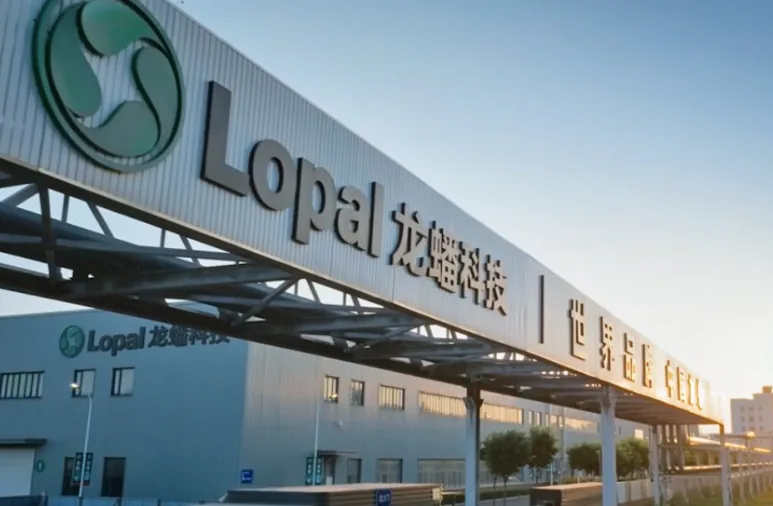
The constraint sits one step further down the chain. Much of LGES’ LFP cathode is contracted to Lopal Technology, a Chinese producer operating in Indonesia, until the end of 2028, and its affiliate LG Chem is building a cathode plant in Morocco with China’s Huayou. While one strategy being touted is to actively restructure entities to bypass stringent 45X rules on Chinese equity ownership, issues such as “effective control” still act as key risks for gaining access to Section 45X Advanced Manufacturing Production Credits (AMPC).
That incentive is already weak. The Korean CAM makers that US cell producers are counting on for compliant supply are building their LFP capacity at home. None has definitively committed to US production, implicitly on the grounds that US tax incentives do not offer enough incentives to cathode makers. The economics support that view: the 45X credit available to a cathode plant is small next to the cell credit that compliant cathode protects, which accrues to the cell maker. When it eventually becomes impossible for US-based LFP cell makers to access 45X cell credits without having compliant CAM—in 2028 or 2029—the value at stake for them will vastly outweigh the production subsidies available to compliant CAM makers themselves (Fig. 2).
Fig. 2: When compliant CAM becomes essential for 45X cell credits (in ~2028/29), having the right source of supply could help US cell makers protect between roughly 12 to 20 times the subsidy available in the form of production credits to CAM makers

Where does this leave Arkansas lithium?
Without a North American cathode industry, Arkansas carbonate is an export, competing for ex-China buyers against supply from South America, Australia and elsewhere. Is there enough room for it?
POSCO Future M has largely covered its needs through the group’s Sal de Oro asset in Argentina. The other Korean LFP cathode makers, whose supply chains were built around hydroxide for nickel-based chemistries, hold little carbonate (Fig. 3). L&F and Lotte have disclosed no carbonate offtakes, EcoPro’s depends on a US project yet to reach FID, and LG Chem buys from a Chinese supplier. These are the natural buyers of Arkansas output, and the timing suits Smackover, since much of LGES’ existing lithium book expires around 2029–30.
Fig. 3: Korean LFP CAM makers have secured little non-Chinese carbonate to date (Korean LFP CAM makers: carbonate needed by LFP capacity vs non-Chinese carbonate secured [binding offtakes and own supply], kt/y LCE)

However, US origin earns little in this market. Neither the 48E credit nor the 45X cell credit looks at lithium. A cathode plant’s own 45X test effectively requires non-Chinese lithium, but Chilean, Argentine and Australian supply passes as easily as Arkansas carbonate. Arkansas lithium must therefore compete on delivered cost and reliability, and selling into Asia through a trader adds freight, a trading margin and the discount a new supplier accepts until qualified, leaving a lower netback than a sale to a US cathode plant.
How well placed is Smackover?
Smackover holds up reasonably well against LGES’ existing suppliers (Fig. 4). Existing brine-handling infrastructure keeps its all-in operating cost, including royalties, at around $5.9k/t LCE, towards the lower end of the group. On a cash basis the definitive feasibility study puts it at $4.5k/t, although capital recovery lifts its full-cycle cost to around $13.5k/t LCE, mid-range. The main risk is execution: DLE has been proven on Smackover brines at demonstration scale but not on commercial equipment, where reagent and energy use and ramp-up speed will decide its position on the curve.
Fig. 4: LGES’ lithium contracts by full-cycle cost: Smackover holds up well relative to competitive peers, but not every prospective US project is as well positioned ($/t LCE—total cost in $k)

What would change the outlook?
A US cathode plant would give Arkansas lithium a domestic customer and a higher netback. The most likely partners are the Korean CAM makers that are already the natural buyers of Arkansas carbonate, so a single site and offtake package could serve both. To have qualified output when the 45X thresholds step up in 2029, such a plant would likely need an FID within roughly the next year.
Whether that happens depends largely on LGES and its major US customers, notably Tesla, which also benefit from cell production credits. If they secure the 45X credit relief through more relaxed qualifying threshold growth, they can keep their credits on Asian cathode, and Arkansas lithium remains an export priced against other ex-Chinese supply. If the rules hold, they will need compliant cathode in volumes Korea is unlikely to supply on its own, and a US plant next to a US lithium source becomes one of the options left. Smackover should reach FID either way, with the decision target before the end of the year. Whether the rest of the Arkansas resource can achieve bankability remains to be seen.
Keen to dig deeper? Stay ahead of the market with REA
Related Insights
- Batteries
- Batteries
- Batteries