
Zimbabwe’s Lithium Export ban: background and implications
Zimbabwe’s importance to the global Li market
Since 2022, Zimbabwe has transitioned from a peripheral hard-rock producer into one of the world’s largest lithium producers and a primary competitor to established mining players such as Australia’s hard rock producers.
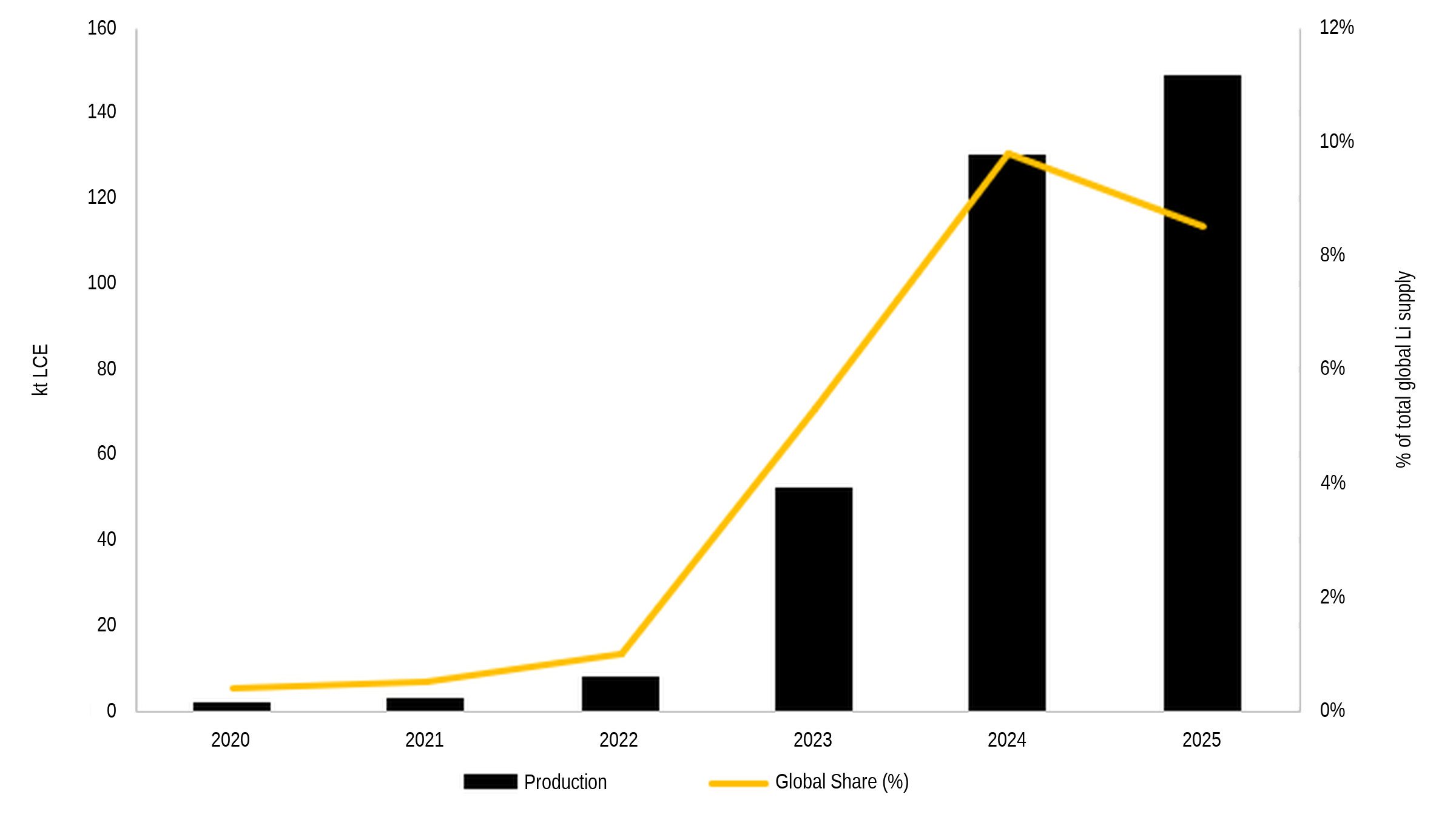
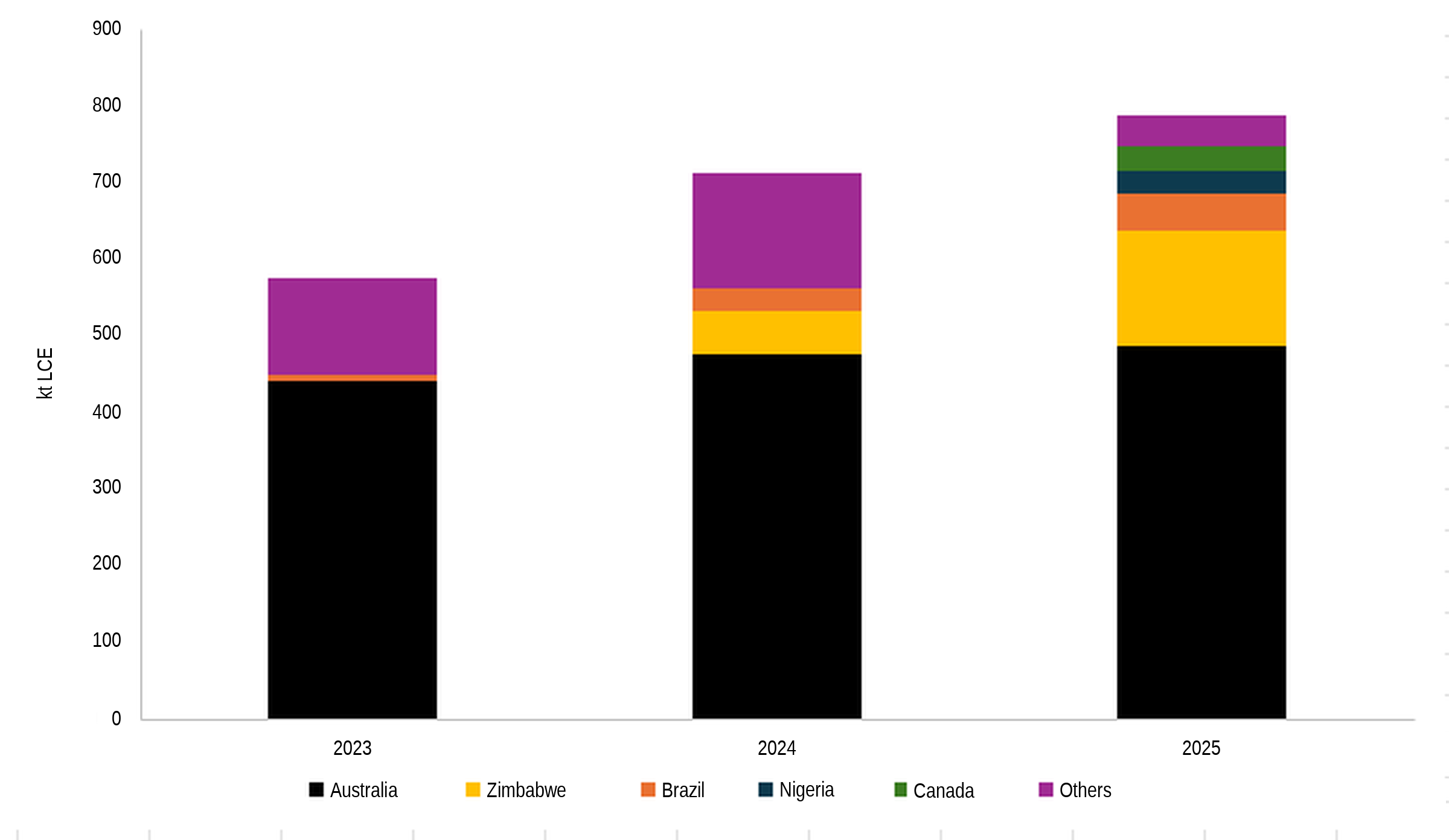
Driven by rapid capital deployment from Chinese tier-1 converters—notably Zhejiang Huayou Cobalt at Arcadia, Sinomine at Bikita, Chengxin at Sabi Star, and Yahua at Kamativi—the country’s lithium output surged from approximately 50kt LCE in 2023 to over 150kt LCE tons in 2025. Reflecting Zimbabwe’s growing importance, the country accounted for around 18% of China’s total hard rock import mix last year.
Crucially, because the majority of this volume is tied up in captive, equity-funded offtake rather than merchant open-market sales, this tonnage has given Chinese refiners greater feedstock flexibility.
It took time to unlock Zimbabwe’s potential as a lithium supplier. Unlike the spodumene-dominated deposits of Western Australia, Zimbabwean deposits yield substantial volumes of petalite alongside spodumene. Petalite is harder to process than spodumene and, as such, was largely used to make technical-grade lithium concentrate for the ceramics industry. However, in recent years Chinese refining circuits engineered specialized acid-roasting and blending flows adapted for petalite feed. As a result, Zimbabwean miners were able to market their petalite concentrate to the lithium-ion sector, which offered far larger demand than the ceramics industry and resulted in them achieving higher sales prices too. Moreover, the ability to monetize both petallite and spoduemene output streams materially improved the economics of lithium production in Zimbabwe.
Zimbabwe Li concentrate production (kt LCE)
Lithium spodumene imports into China (kt LCE)
What is driving the move?
Harare’s regulatory intervention in the lithium sector—which has featured export levies and a phased push to replace raw concentrates with intermediate chemicals—is a calculated bid to capture downstream margins and reshape economic ties with Beijing.
Having absorbed more than US$1bn in balance-sheet investments from Chinese battery materials giants such as Zhejiang Huayou Cobalt, Sinomine, and Chengxin, the government is using its leverage to convert foreign-owned mines into domestic industrial assets. In short, Zimbabwe’s policy—similar to that of the DRC for cobalt—is designed to plug persistent revenue leaks: bulk shipments of untreated concentrate have long masked valuable, unassayed accessory minerals—notably tantalum, niobium and tin—that left the country untaxed.
The industrial case for domestic processing is driven also by the economics of overland logistics. Commercial pegmatite concentrates grade at just 3.5% to 6% lithium oxide, meaning over 90% of the volume trucked hundreds of kilometres to ports in Mozambique and South Africa is inert host rock. Compelling miners to produce water-soluble lithium sulphate shifts the initial, energy-intensive stage of refining—calcining the ore at over 1,000°C to alter its crystal structure, followed by acid roasting—directly to the mine gate.
While Zimbabwe’s fragile power grid and scarce domestic reagents pose clear execution risks, the freight savings achieved by drastically reducing haulage mass per tonne of lithium carbonate equivalent provide Chinese converters with a credible commercial incentive to invest in local chemical infrastructure.
Already, the move is paying off with key players such as Zhejiang Huayou Cobalt, Sinomine Resource Group and Sichuan Yahua Industrial Group working to build lithium sulphate facilities at their mine sites. REA currently estimates around 100-120kt LCE of lithium sulphate capacity under construction.
Will the move impact Li balances and pricing?
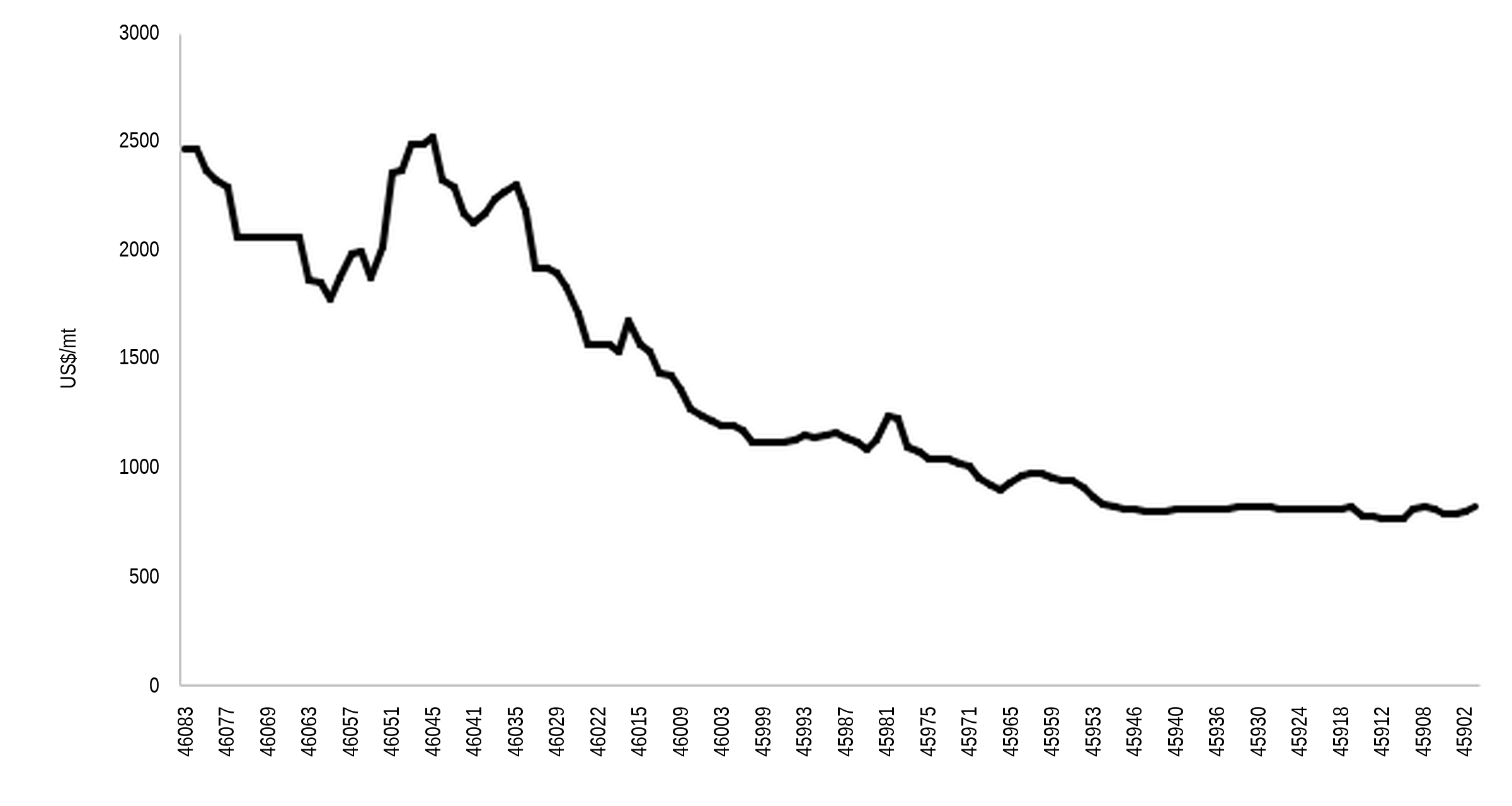
Lithium Spodumene 6% FOB Australia $/mt
First, the market still has to contend with the potential return of China’s Jianxiawo lithium mine (potentially representing close to 100kt LCE of capacity), a strategic asset that has previously given CATL control of the industry’s marginal tonne.
Second, a higher price environment would also encourage the resumption of assets previously placed on care and maintenance during the previous downturn in 2024—notably Australian assets such as Bald Hill and Finniss.
REA also understands that instead of a blanket ban, Zimbabwe’s government is likely to move more toward to an export quota regime later this year—similar to moves made by the DRC in the cobalt market. The combination of the above means that Zimbabwe’s latest regulatory moves should be seen more as an adjustment to China’s Li value chain, rather than an outright disruption to Li supply.
Keen to dig deeper? Stay ahead of the market with REA
Related insights
- Batteries
- Batteries
- Batteries