Middle East Gas
Overview
The Middle East is rapidly accelerating gas output. With production of around 60bcf/d just over a decade ago, gas production across the region is set to reach close to 100bcf/d by 2030, driven by gains not just from conventional onshore and offshore fields but also unconventional assets, particularly in the UAE and Saudi Arabia. The ripple effects of the Middle East’s push for gas are significant: greater liquids displacement in countries such as Saudi Arabia, higher LNG exports, increased gas and renewables pairing in power systems and the region’s wider integration into the global AI energy economy.
Our Benefits
Fundamentals
REA provides detailed coverage on the key trends influencing the Middle East’s gas balance, including country-level supply, consumption trends, infrastructure and power mix analysis.
Asset Economics and country risk
Deep-dive analysis on gas field projects, production forecasts, cost curve positioning and fiscal regimes. Clients can also leverage REA’s in-country network in countries such as UAE, Iraq, Saudi Arabia and Oman.
Power demand and generation by fuel
REA provides analysis of Middle East power generation capacity, fuel switching trends and long-term forecast on demand and generation by type.
Offtakes and pricing
REA provides clients with analysis on gas sales marketing agreements, offtake and pricing
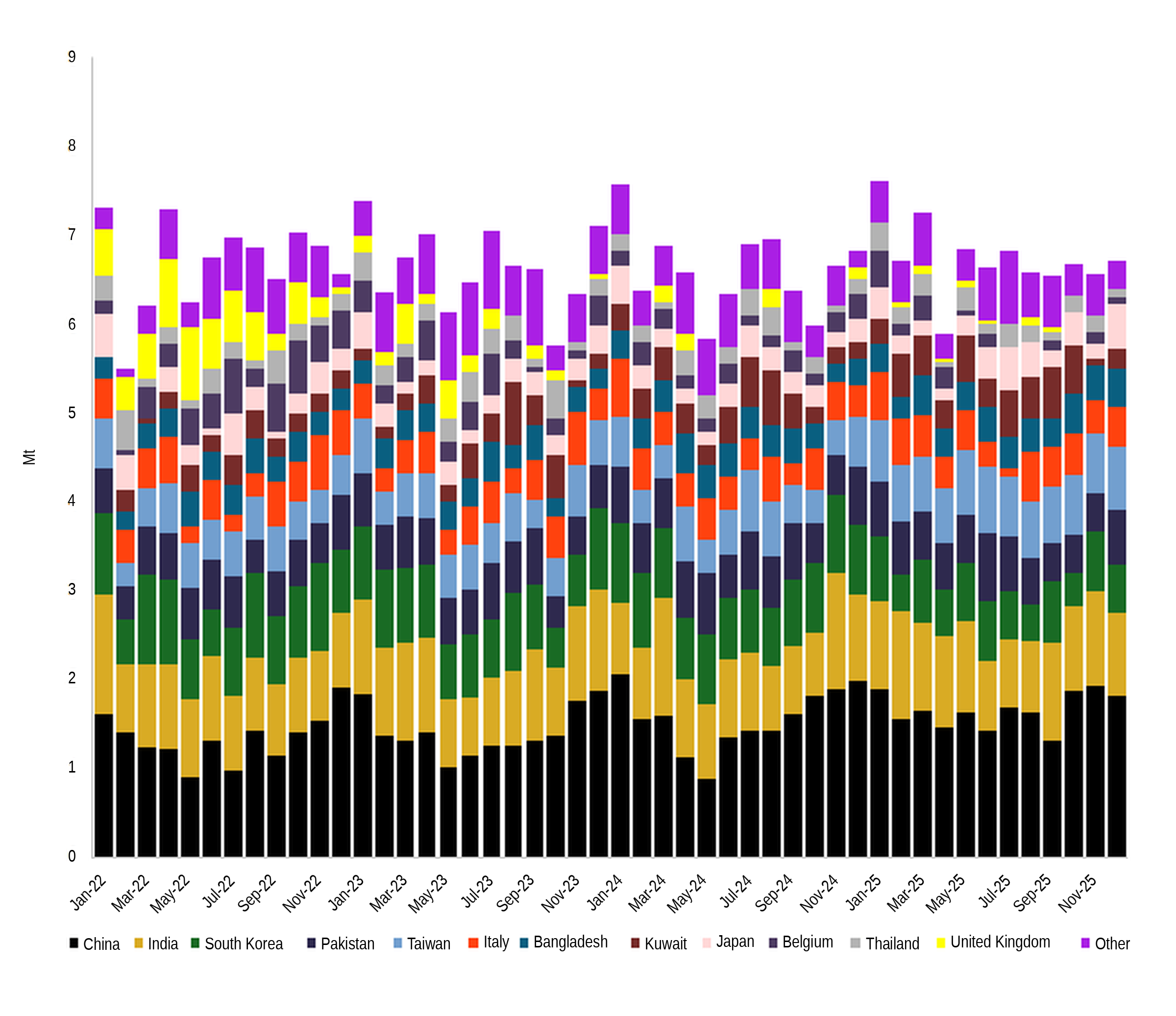
Qatar LNG exports by country (million tonnes)
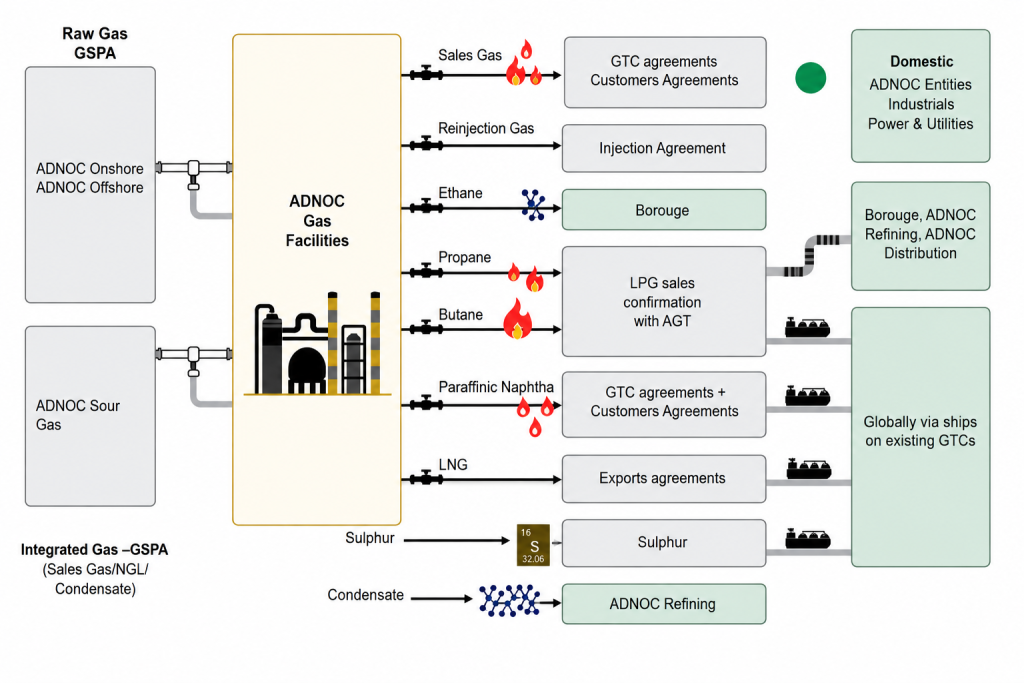
ADNOC’s gas value chain
Deliverables
Monthly Report
Clients receive a pdf report focused on key developments shaping the Middle East gas market. The report provides insight and analysis on key commercial developments in the Middle East gas market, including asset-level project economics, regional demand and supply trends, geopolitical developments, offtakes, pricing and trade flows.
Country level analysis
Alerts
Clients receive regular alerts in response to market-moving events. Our alerts help clients understand the ‘so-what’ to major events impacting Middle East gas markets, helping clients keep on top of major developments in the region.