The SC6 market has undergone a dramatic transformation over the past few years. An influx of lower-cost African spodumene from Zimbabwe, Nigeria, and Mali, combined with new Brazilian output and expanded Chinese processing of domestic lepidolite, has flooded the market. These sources contributed more than a third of global lithium supply growth between 2024 and 2025, significantly lowering the industry cost curve. Chinese refiners and downstream players, seeking greater control over feedstock supply, increasingly favoured integrated lepidolite feed, which intensified competition for Australian hard-rock concentrate.
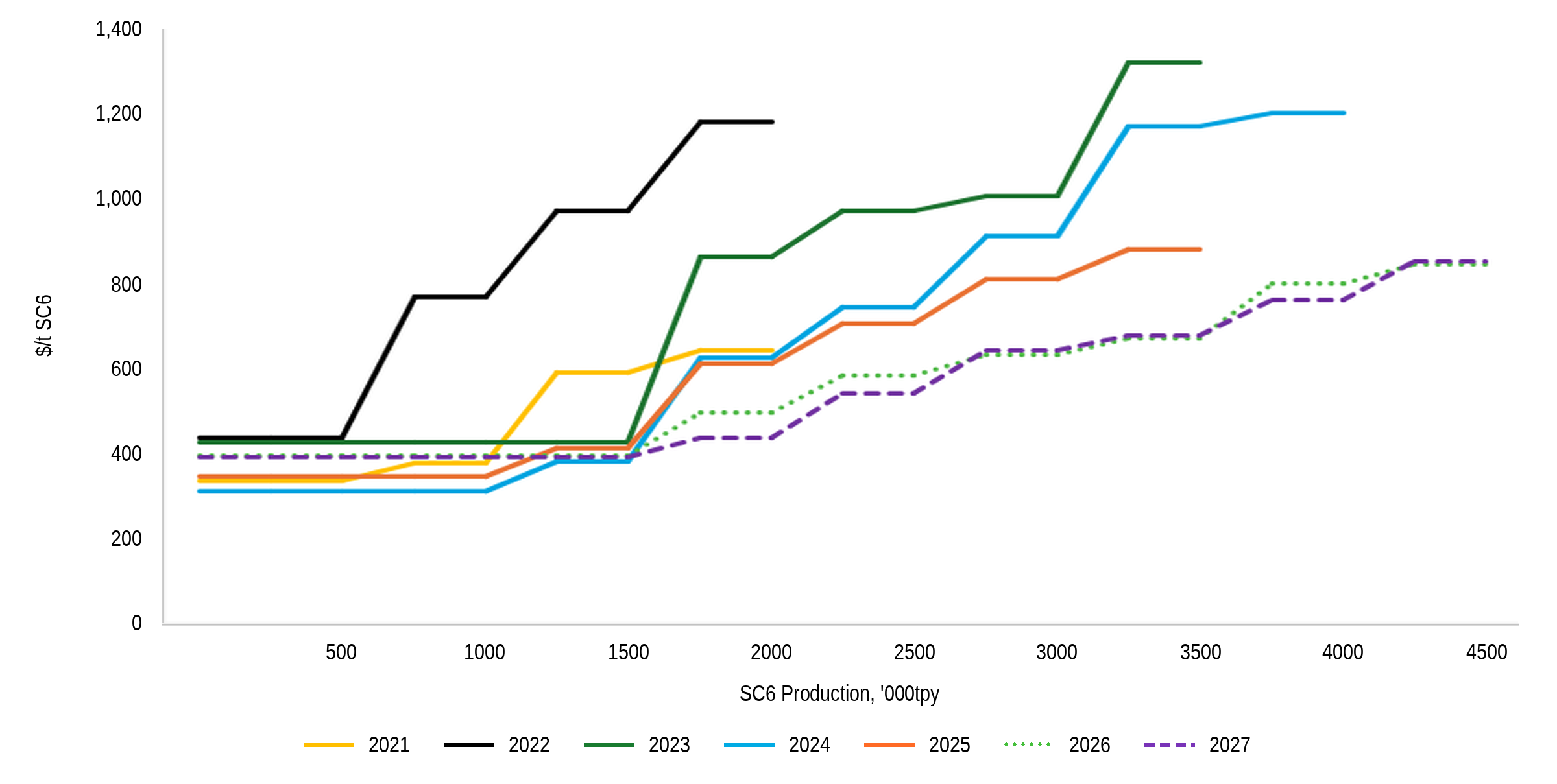
Australian producers responded to the collapse in prices by embarking on aggressive cost-reduction programmes. The result has been a noticeable flattening of the SC6 cost curve at both the operating cash cost and all-in sustaining cost levels. Project expansions played a role in achieving this change, notably PLS’s Pilgangoora mine moving from 580ktpy to 1mktpy nameplate capacity.
Cost reductions also stemmed from operational efficiencies, notably improved recovery rates achieved through better feed grade management, advanced flotation, milling optimizations, and ore sorting. Lower unit costs led to improved operating margins for PLS and Greenbushes in particular. This in turn allowed them to preserve stable cash positions, while others, such as MinRes, were forced to raise capital.
Each of the various Australian producers started from a different position following the end of the last pricing cycle. But since then, they have generally converged on the same strategic playbook—invest to expand output and reduce unit production costs. Some are at different stages of their capital investment cycles. Liontown invested in getting Kathleen Valley into production in 2024 before moving to fully underground production in 2025; its capex spending should now decline substantially for the next three years or so. By contrast, having built up cash reserves while expanding capacity, PLS are now poised to invest in further expansions that could come online in the late 2020s.
Generally, this indicates a shared confidence among Australian producers that lithium demand will grow strongly in future. That view is coupled, however, with recognition that protection against volatility is also vital, hence the effort to ensure lower production costs.
Looking ahead, REA believes that Australia idled brownfield assets could cap the current price rally in the medium-to-long term. PLS’s Ngungaju plant is on care and maintenance but has potential to restart within 3-4 months. If it were brought back into operation, PLS’s average unit cost would likely increase, bringing it closer to those Australian producers that are currently positioned in the third and fourth quartiles of the curve. Elsewhere in Australia’s lithium sector, MinRes’ Bald Hill and Core Lithium’s Finniss mines, both suspended in late 2024, are probable candidates for restart in 2026 if prices hold. Beside this, competitive supply from Africa and Brazil could help keep pricing in check through 2026–2027.
A more generalised flattening of the global cost curve thus limits the upside to Australian miners from cost-cutting alone. It also highlights the need for broader corporate strategies beyond operational tweaks to ensure long-term resilience and growth in a rebalancing market.