
Record cracks: Global Refining and the Supply-Side Bottleneck
Asia product cracks v Dubai (US$/b)
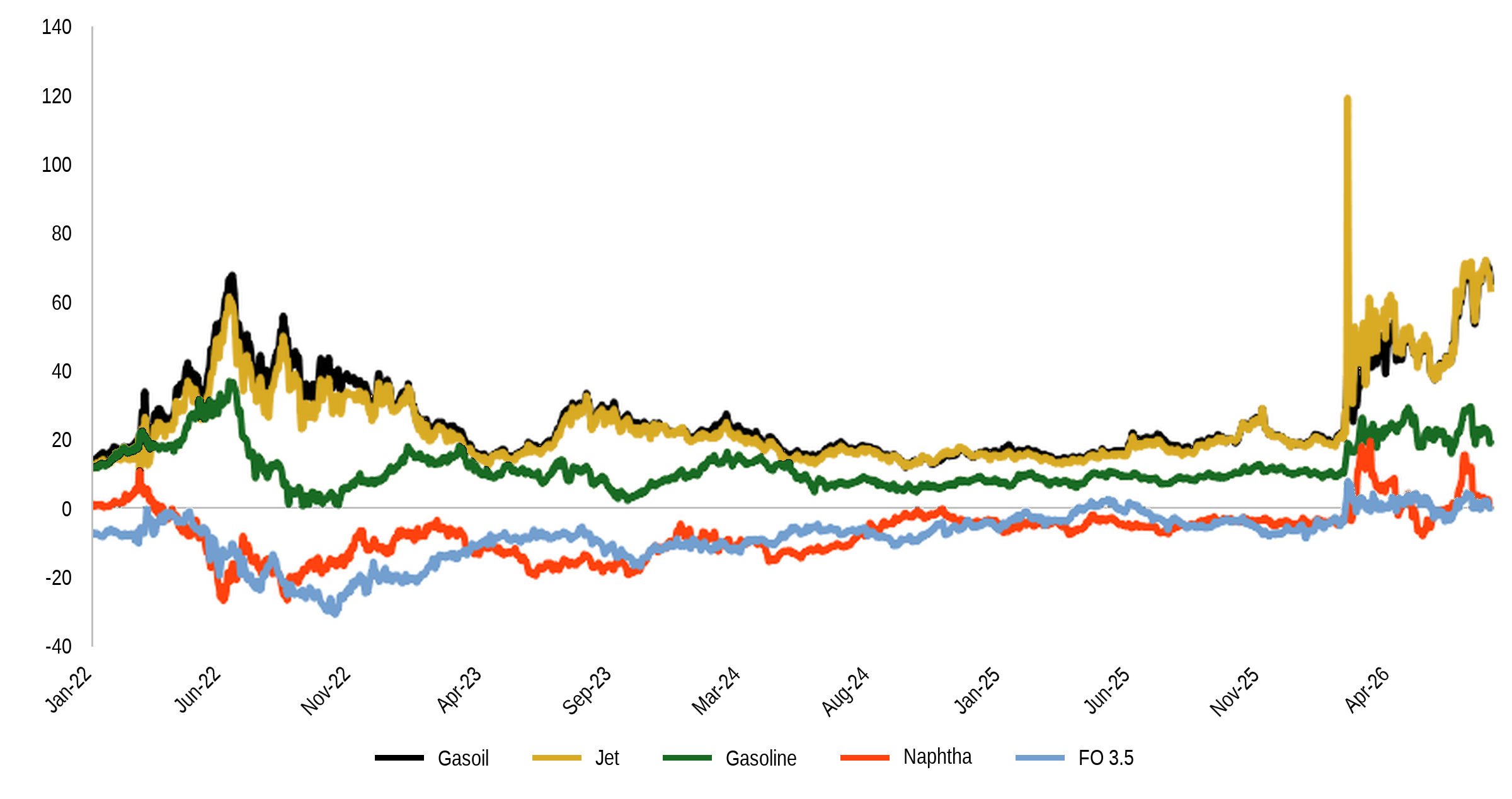
While 2022-24 was an exceptionally bullish period for product cracks, the market at least had the comfort of a wave of refining projects from the Middle East (Al-Zour, Jizan, Duqm etc) as well as the much-anticipated start of Africa’s largest refinery: Dangote – a watershed moment for Atlantic basin gasoline balances and flows.
Middle East refinery attacks and lower runs: at its peak, around 2.5m b/d of Middle East refining capacity was either offline or severely disrupted. While July and Aug saw runs increase in Oman and Iraq – as well as repairs in Kuwait and UAE – Houthi attacks against the Jizan refinery in August reflect the reality that re-establishing stable operating rates and product exports is set to lag the recovery in crude exports from the ongoing war. This is further highlighted by the fact that oil products have no equivalent of Saudi’s East-West pipeline or the UAE’s bypass system for crude.
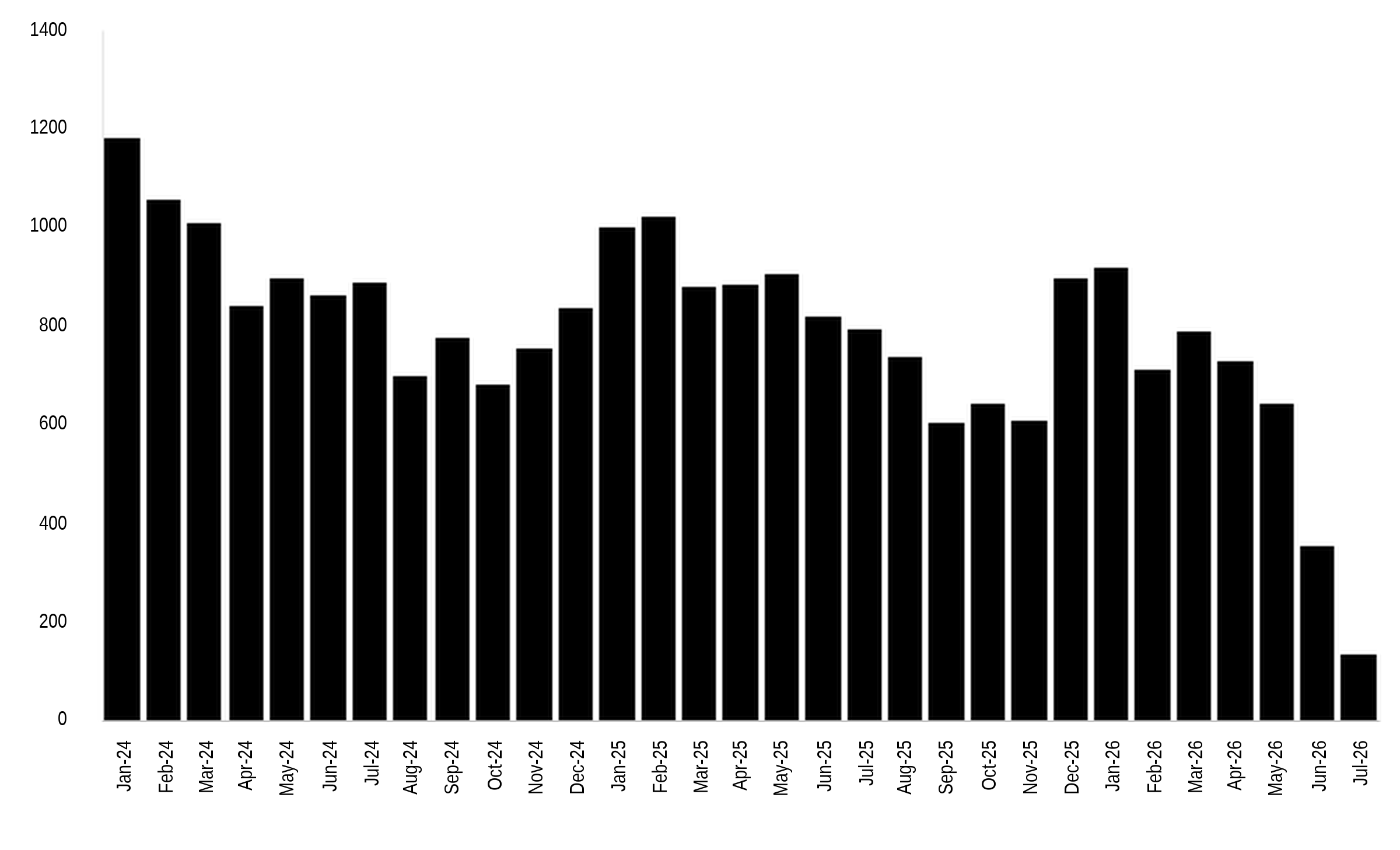
Ukrainian attacks on Russian refineries: with a total refining capacity of around 6.5m b/d, attacks on Russian refineries have accelerated significantly since 2025. Some recent attacks include the Kirishi refinery in early May, Perm refinery and the Tuapse refinery, suffering four strikes in two weeks in April and May. While Russian oil companies have shown their ability to execute quick repairs, the attacks this summer – unlike in 2025 – have been more focused on secondary units (FCCs and hydrocrackers), impacting diesel supply – not just CDU throughput – and further complicated by challenges in sourcing replacement parts due to tighter sanctions. As a result, downtime rates in 2026 v 2025 have been longer, a key driver behind Moscow’s decision to extend its ban on diesel exports – further tightening NWE diesel cracks.
Russia seaborne diesel exports (kb/d)
China’s role as the global swing: while Beijing expanded baseline export quota allocations in July, sovereign mandates requiring state-owned refiners (Sinopec, PetroChina) to maintain minimum commercial safety stock buffers strictly cap net clean product outflows. Concurrently, independent “teapot” refiners in Shandong face acute margin compression as discounts for imported Russian ESPO and Iranian crude narrow. With regional medium/heavy crude availability tightening—reflected in elevated tender premiums for ADNOC grades and steepening prompt Dubai backwardation— can the market rely on China increasing product exports further this year? Unlikely, in our view. China’s strategy prioritizes domestic consumer price containment over monetizing elevated overseas cracks.
Fig. 5: EU xEV imports: Min. pricing unlikely to tackle inflow of PHEVs from China
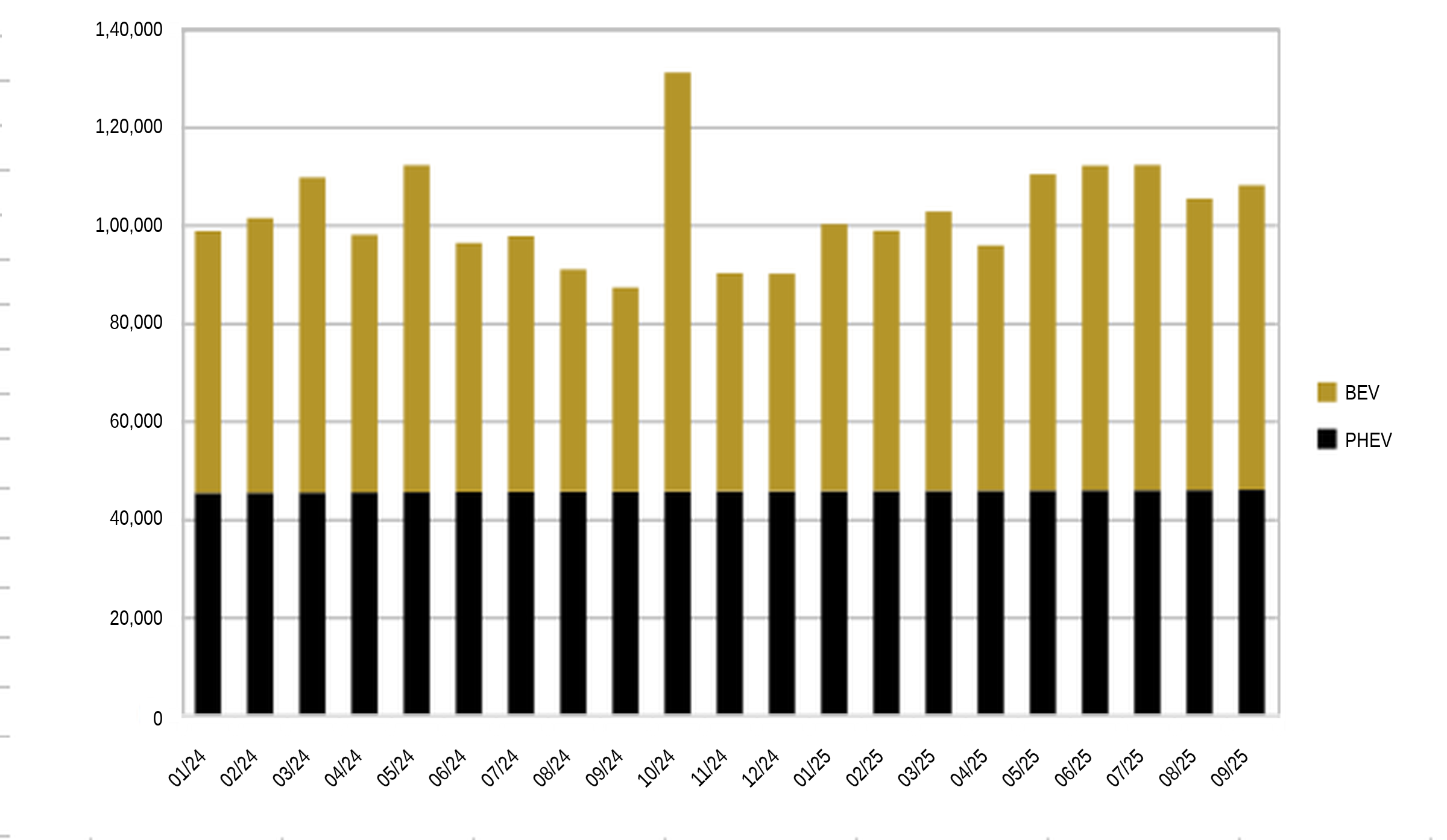
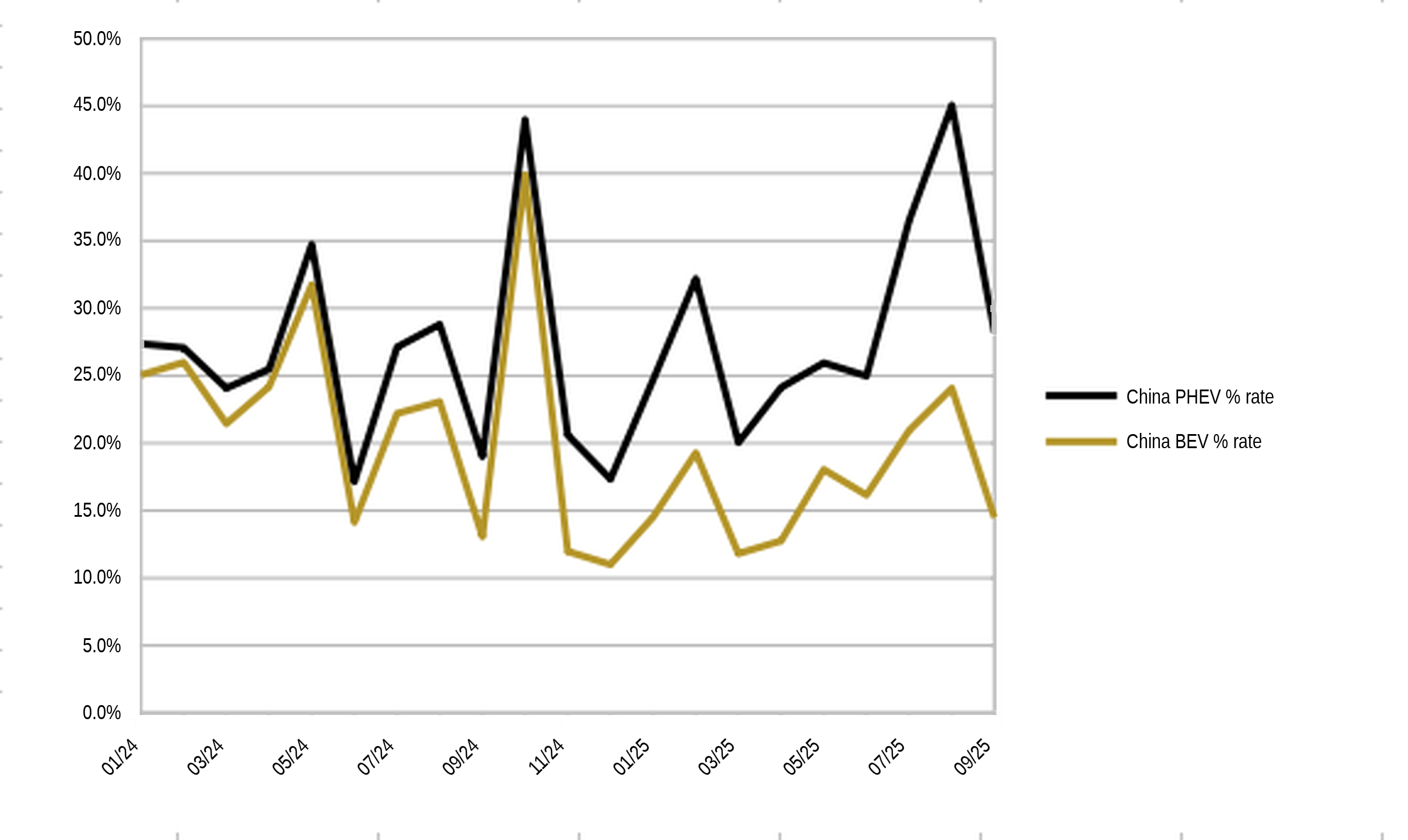
Fig. 6: China-made xEVs as a % of total EU sales for respective segment
Keen to dig deeper? Stay ahead of the market with REA
Related Insights

- Oil, Geopolitics